

Moroccanoil curl control cream: How to use it for defined, frizz-free curls
Key Takeaways
A good curl routine is less about using a lot of product and more about matching the formula, amount, and drying method to your hair. Start small, distribute carefully, and adjust after seeing how your curls behave.
- Apply curl cream to clean, damp hair and distribute it evenly.
- Begin with a small amount, then add more only where needed.
- Scrunch, rake, or use praying-hands motions according to your curl pattern.
- Air-drying gives a relaxed finish, while diffusing can help activate definition.
- Shop through an authorized retailer for fresh, authentic products and clear delivery terms.
What Moroccanoil curl control cream does
Curl cream is designed to make natural texture easier to shape and manage. The right formula can help curls look more organized without making them feel stiff, while the right application preserves movement. Think of it as a styling step that sits between conditioning and stronger hold products.
The phrase moroccanoil curl control cream is often used broadly, but the brand’s curl formulas are not all identical. Read the product name, directions, and intended hair type before deciding how to use one.
How the cream supports curl definition
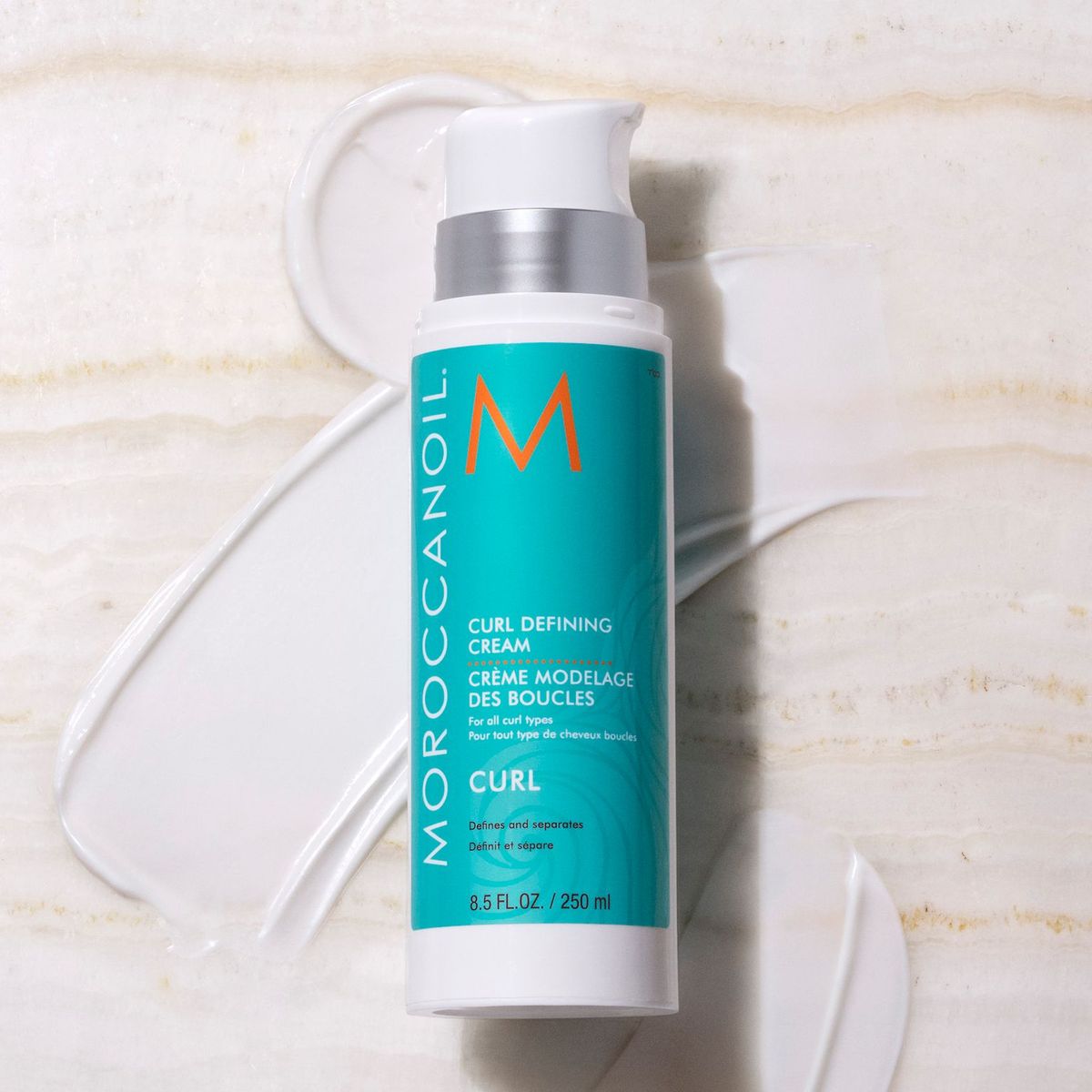
A curl cream gives strands slip and helps neighboring hairs group together as they dry. That grouping can make waves and curls appear more defined, especially when the product is applied evenly from mid-lengths through the ends. The Moroccanoil Curl Defining Cream is described as an all-in-one styling product that conditions, detangles, and enhances natural texture while offering volume, control, shine, and humidity resistance.
Use enough to coat the hair lightly, not enough to saturate it. Even distribution matters most when the goal is definition without a coated feeling.
The role of moisture and frizz control
Dryness and frizz often become more visible when the hair’s surface is rough or when curls dry in separate, fuzzy sections. A moisturizing cream can make the styling process smoother and help the finished hair feel softer. It will not remove every sign of humidity or damage, though, so keep expectations realistic.
For a lighter conditioning option, the Moroccanoil Hydrating Styling Cream is described as a leave-in formula that conditions, smooths flyaways, refreshes styles, and adds shine and definition with gentle hold. That makes it a related option when soft manageability matters more than a strongly sculpted result.
Which curl patterns may benefit most
Wavy and curly hair can both benefit from cream, but the amount and finish will differ. Waves may need only a small veil through the ends, while denser curls often need more deliberate sectioning so the product reaches every strand. Coils and tighter textures may also respond better when cream is paired with a product that supplies additional hold.
Use your hair’s density, porosity, and usual drying behavior as the guide rather than relying only on a curl-type label. Two people with the same broad pattern can need noticeably different routines.
How it differs from mousse, gel, and leave-in conditioner
Cream usually prioritizes softness, conditioning, and flexible definition. Mousse tends to add body and airy hold, gel generally creates firmer structure, and leave-in conditioner is primarily used to soften, detangle, or moisturize. Some products overlap, so the label and the finish are more useful than the category alone.
The Moroccanoil Curl Control Mousse, for example, is described as providing long-lasting hold, sealing in moisture, and preventing frizz without a crunchy or sticky residue. A cream can be used alone for a softer result or followed by mousse when the hair needs more staying power.
How to choose the right amount for your hair
The correct dose depends on more than length. Fine hair can become heavy quickly, while thick or porous hair may absorb product before the curls have enough support. Start conservatively and judge the result once the hair is fully dry rather than adding several pumps at once.
A useful test is to apply the first portion to the underside and ends, then check whether the surface feels conditioned and slippery. If some areas still feel rough, add a little more there instead of coating the entire head again.
Adjusting the dose for fine, medium, and thick hair
Fine hair generally benefits from a small amount spread over very wet or damp sections. Medium-density hair can usually take a moderate application, while thick hair often needs several small portions rather than one large blob. Working in portions gives you better control and prevents the outer layer from receiving everything.
| Hair profile | Starting approach | What to watch for |
|---|---|---|
| Fine or low-density | Use a small amount on the ends first | Flat roots or limp waves |
| Medium density | Divide the hair and apply gradually | Uneven definition between sections |
| Thick or dense | Use several small portions | Dry patches beneath the surface |
| Highly porous | Add product in thin layers | Roughness returning while drying |
After the first attempt, adjust one variable at a time. That makes it easier to tell whether the issue was the dose, the water level, or the drying method.
When short hair needs less product
Short hair has less length to absorb cream, and its roots are often close to the styling area. Begin with a very small amount warmed between your palms, then press it into the areas that actually form a wave or curl. Applying cream directly at the roots can make short hair look flat or separated.
If the hair still feels dry after styling, add a trace more to the ends. Short hair usually benefits from restraint because even a small excess is visible.
Why long or highly porous hair may need more
Long hair has more surface area, and porous strands can lose moisture quickly as they dry. Rather than applying a heavy layer at once, divide the hair and build coverage gradually from the middle lengths toward the ends. This approach also helps you reach the interior sections that are easy to miss.
The Moroccanoil Intense Curl Cream is described as a leave-in conditioner that moisturizes and defines natural curls and waves while fighting frizz without stickiness. Its directions allow application to damp or dry strands, but a first application on damp hair makes it easier to distribute evenly.
Signs you have applied too much or too little
Too much cream can leave hair greasy, stringy, slow to dry, or noticeably flat at the crown. Too little may show up as rough ends, scattered frizz, weak curl grouping, or sections that lose their shape quickly. These signs are useful feedback rather than a reason to abandon the routine.
On the next wash day, reduce or increase the amount slightly and keep the rest of the routine the same. Small changes are easier to evaluate than a complete product overhaul.
How to apply Moroccanoil curl control cream
Application begins before the product touches the hair. Cleanse and condition according to your usual needs, then remove excess water without rough towel rubbing. Hair should be damp enough for the cream to glide, but not so wet that the product immediately runs off.
Take time to distribute the product instead of scrunching it into one area. Curls usually look more consistent when each section receives similar attention.
Starting with freshly washed, damp hair
After washing, gently squeeze the hair with your hands or use a soft towel to reduce dripping. Rub the cream between your palms until it feels spreadable, then place it over the lengths and ends. Start with less than you think you need; damp hair can make a small amount travel surprisingly far.
If your hair is already dry, lightly mist it with water before adding more product. This can help reactivate the existing shape without forcing you to apply a full fresh dose.
Sectioning hair for more even coverage
Sectioning is especially useful for dense, long, or layered hair. Make two to four loose sections depending on volume, clip away the areas you are not working on, and apply the cream from the lower sections upward. You do not need perfect partings; the goal is simply to avoid leaving hidden areas untreated.
Once every section has product, gently smooth the outside and check the back with your hands. Uneven application is a common cause of one side looking more defined than the other.
Using scrunching, raking, or praying-hands techniques
Raking separates and coats the strands with your fingers, which can help distribute cream through dense hair. Praying-hands motions smooth the product over the surface, while scrunching encourages the hair to gather into its natural shape. Use one method or combine them, depending on how much separation and encouragement your curls need.
A simple sequence is to rake through each section, smooth the ends between your palms, then scrunch upward. Keep the pressure gentle so you do not pull the curl pattern apart.
Combining the cream with other styling products
Layering can work when each product has a clear role. Cream can provide softness and shape, while mousse or gel can add more hold; however, too many layers may leave curls heavy or create residue. Test combinations on one section first and allow it to dry before committing to the whole head.
For a separate conditioning step, the Moroccanoil All In One Leave-in Conditioner is described as moisturizing, protecting against heat damage, and refreshing second-day hair. If you use it with curl cream, reduce the amount of one product so the hair is not overloaded.
How to enhance and preserve your curls
The drying stage can change the final appearance as much as the product itself. Touching the hair repeatedly, moving it while wet, or drying it with strong uncontrolled airflow can disturb curl groups. Choose a method that fits the finish you want and then give the hair time to set.
Preserving curls also means treating the second and third days as light refreshes, not full restyling sessions. Water, patience, and a small amount of product are usually enough to bring shape back.
Air-drying versus using a diffuser
Air-drying tends to produce a softer, more relaxed result, while a diffuser can shorten drying time and encourage definition. Keep the airflow gentle and avoid constantly moving the hair around. If you diffuse, support sections in the bowl rather than stretching them downward.
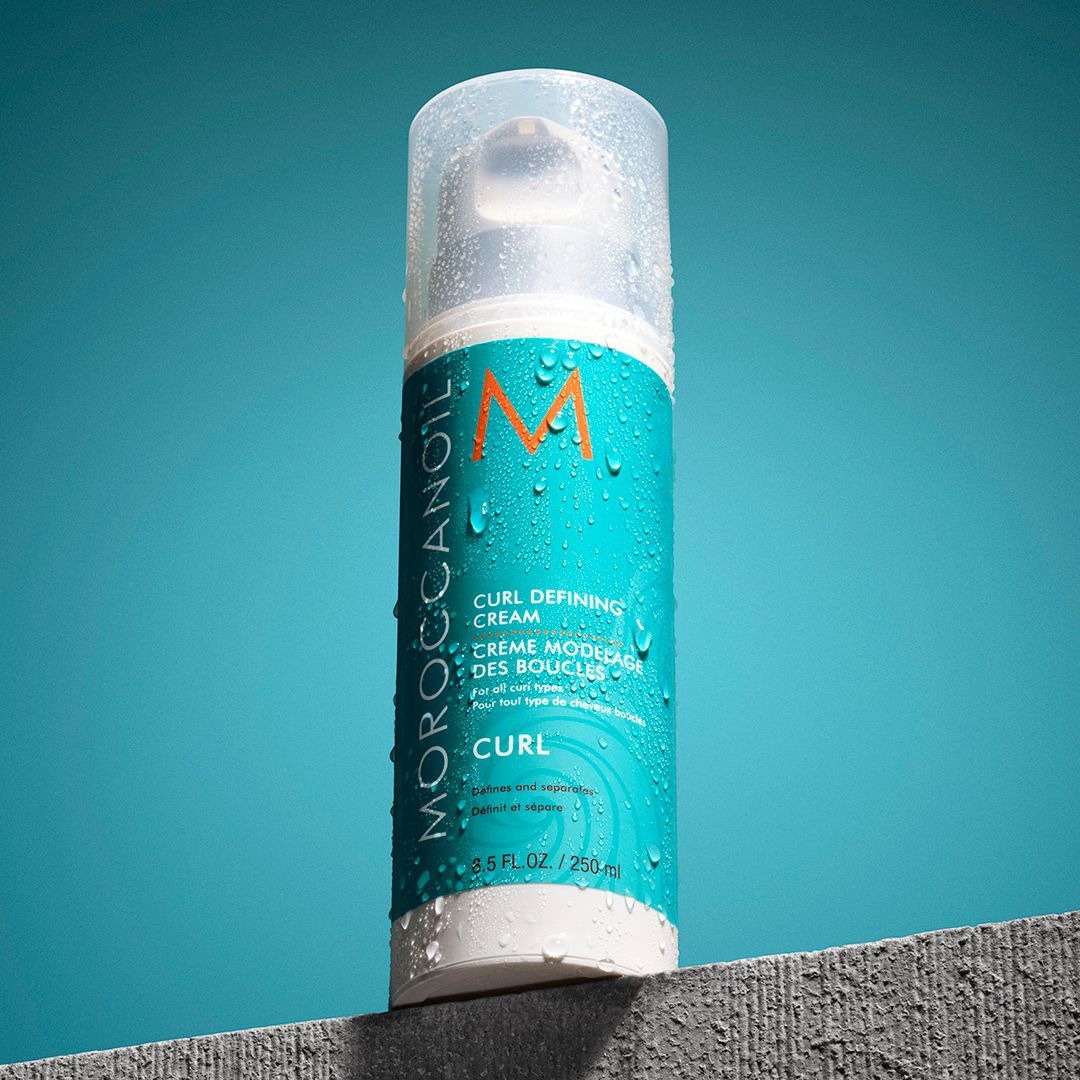
The product directions for Curl Defining Cream recommend applying it to towel-dried hair and diffusing to activate and define curls, while natural drying is suggested for a more relaxed curl. Follow the directions on your specific formula because products can vary.
Reducing frizz while hair dries
Leave the hair alone as much as possible while it is wet. If the ends look separated, cup them in your palms and scrunch once or twice, then stop. A smooth towel or cotton fabric can remove excess water with less disruption than vigorous rubbing.
Humidity can still affect the finished shape. The Moroccanoil Frizz Shield Spray is described as a weightless mist that repels humidity and helps protect against frizz, static, and flyaways, so it may suit routines where humidity is the main concern.
Refreshing curls on the second or third day
Start a refresh with lightly damp hands or a fine mist of water. Scrunch the areas that have lost shape, then use a tiny amount of cream only where the hair feels dry or frizzy. Avoid applying a full original dose unless you are intentionally restyling.
The Moroccanoil Intense Curl Cream page notes that the formula can be gently worked into dry hair during the day to refresh curls and control frizz. Use that guidance as a starting point, then adapt the amount to your own density.
Protecting definition overnight
Before bed, gather longer curls loosely at the top of the head or arrange them so they are not trapped beneath your shoulders. A smooth pillowcase or a soft wrap can reduce friction, while very tight ties may create dents. In the morning, release the hair and reshape only the sections that need attention.
Night protection cannot preserve every curl perfectly, but it can reduce the amount of manipulation required the next day. A short refresh is usually kinder to the pattern than repeated brushing.
How to tailor the routine to different curl needs
The same cream can give different results depending on density, porosity, and the finish you prefer. Soft waves may need light coverage and minimal handling, while tight curls may need more sectioning and a stronger finishing layer. Adjust the routine by observing the hair, not by chasing a fixed number of pumps.
Build changes slowly. A routine that feels slightly too simple is easier to refine than one crowded with products that are difficult to separate and assess.
Creating soft, touchable waves
Use a small amount on damp hair, concentrating on the mid-lengths and ends. Rake lightly, scrunch upward, and allow the waves to dry without excessive touching. If the result feels flat, focus any additional product below the ears rather than at the roots.
The goal is movement rather than maximum contraction. A little separation can make waves look natural, while too much product may make them lose their airy quality.
Defining tighter curls and coils
Tighter patterns often benefit from smaller sections and more deliberate coverage. Smooth the cream through each section, encourage the curl with scrunching or finger coiling if that is already part of your routine, and avoid pulling the hair straight while applying it. Allow the pattern to form before adding any stronger hold product.
Pay attention to the interior layers. They can dry more slowly and may need product distributed with fingers rather than only pressed over the surface.
Managing dry, coarse, or high-porosity hair
Dry or coarse hair may need a conditioning base before styling, especially when the ends feel rough immediately after washing. Apply cream while the hair still contains plenty of water, and work in sections so porous areas receive enough coverage. If the hair remains dry, revisit cleansing and conditioning rather than endlessly increasing styling product.
For repair-focused washing, Moroccanoil Moisture Repair Shampoo is described as a color-safe cleanser that hydrates dry strands and supports improved manageability. It belongs to the wash routine, not as a substitute for styling cream.
Avoiding weighed-down curls and buildup
Use less product near the scalp, clarify when your normal routine leaves a film, and avoid refreshing repeatedly without washing. Buildup can look like dullness, limpness, or curls that stop responding to water and scrunching. If the hair feels coated, pause and simplify the next wash day.
A light touch is especially useful when combining cream with mousse, oil, or leave-in conditioner. Keep the number of layers low enough that you can tell which product is helping.
How to shop for Moroccanoil curl products with confidence
Shopping is easier when you compare the stated purpose of each formula instead of choosing by the word “curl” alone. Check whether the product is meant to condition, define, refresh, add hold, or support another styling step. Size and availability can change, so review the current product page before ordering.
An authorized retailer is also useful when freshness and authenticity matter. Boutique Deauville states that it sources directly from brands, carries fresh inventory, and offers free samples with orders.
Comparing curl creams with related Moroccanoil formulas
A curl-defining cream is different from a general styling cream, a mousse, or a treatment oil. The Moroccanoil Curl Defining Cream is positioned around defining natural texture and providing control, while the Moroccanoil Volumizing Mousse is described as a lightweight option for building body in medium to fine hair. Compare the intended finish, hold, and hair profile before adding either to your cart.
Other formulas serve different concerns. The Moroccanoil Shine & Seal Duo combines a treatment aimed at shine and frizz with a mending finisher, so it should not be treated as a direct replacement for curl cream.
Checking product authenticity and freshness
Look for a reputable seller, intact packaging, clear product information, and a reasonable return or support process. Boutique Deauville identifies itself as an authorized retailer and says its products are sourced directly from brands. That matters because unauthorized listings can create uncertainty about storage, age, and authenticity.
If a product arrives damaged or an order issue occurs, contact the retailer promptly. Keeping the order confirmation and packaging can make that conversation easier.
Reviewing sizes, pricing, and available samples
Compare the cost per use rather than only the sticker price. A travel size can be a sensible way to test how a formula behaves before committing to a full bottle, particularly when your hair is fine or easily weighed down. Check whether samples are offered and whether any cart promotion applies.
The retailer states that all orders include free samples and that customers can choose a free gift when an order exceeds $75. These offers may be subject to current site terms, so confirm them at checkout.
Understanding shipping and delivery options in Canada and the US
Prices are available in CAD and USD, and shipping thresholds differ by country. The retailer states that shipping is free on orders over $99 across Canada and over $150 across the U.S., with orders shipped through UPS or Canada Post. Orders are generally processed within one to two business days, Monday through Friday, and delivery can take up to seven business days depending on location.
Packages are sent without a signature by default, with signature options and inclusions varying by order value. For a direct purchase path, you can shop curl products and review the current delivery terms before placing the order.
Take the Guesswork Out of Curls
Once you know how much product your hair can handle and how it responds to moisture, curl styling becomes much more predictable. Explore the available curl products, start with a measured amount, and build a routine that leaves your hair defined, comfortable, and easy to refresh.
Conclusion
Defined curls usually come from a coordinated routine: damp application, even coverage, a suitable amount, and gentle drying. Start small, observe the finished result, and make one adjustment at a time so your styling choices stay clear and repeatable.
Frequently Asked Questions
Should curl cream be applied to wet or dry hair?
Most routines work best on damp hair because water helps the product spread evenly and encourages curl grouping. A small amount can also be used on dry hair for targeted refreshing, depending on the formula.
How much curl cream should I use?
Begin with a small amount and add gradually. Fine or short hair often needs less, while thick, long, or porous hair may need more applied in sections.
Can curl cream make hair greasy?
It can if too much is applied or if the formula is layered with several other rich products. Keep the roots light and adjust the dose based on how the hair feels after drying.
Is curl cream enough to hold curls all day?
That depends on the hair and the desired finish. Cream usually offers flexible definition, while mousse or gel may be helpful when the style needs more lasting structure.
Should I scrunch curl cream into my hair?
Scrunching can encourage the natural pattern after the product is distributed. Apply the cream first, then scrunch gently so you do not create uneven patches.
Is air-drying or diffusing better for curls?
Neither method is universally better. Air-drying often gives a softer finish, while diffusing can speed drying and support definition when used with gentle airflow.
How can I refresh curls between wash days?
Mist the hair lightly with water, reshape the areas that need help, and add only a small amount of product to dry or frizzy sections. Avoid repeatedly layering full applications.






Laissez un commentaire