

Cider vinegar rinse for hair: benefits, risks, and a safe how-to guide
Key Takeaways
A cider vinegar rinse can be a simple occasional addition to a hair routine, but it is not risk-free or a proven growth treatment.
- Always dilute vinegar generously before applying it to hair or scalp.
- Use a patch test and keep the mixture away from your eyes and broken skin.
- Start infrequently, then judge the rinse by scalp comfort and hair texture.
- Follow with conditioner or another moisturizing product, especially on dry hair.
- Stop if you notice burning, persistent redness, swelling, or unusual shedding.
What a cider vinegar rinse does for hair and scalp
A cider vinegar rinse is usually used after shampooing to remove some residue and leave the hair feeling lighter. Its acidity may temporarily affect the surface of the hair, but claims about dramatic repair or accelerated growth go beyond what this home treatment can reliably provide. The response depends on the strength of the mixture, how often it is used, and the condition of the scalp. Think of it as an optional rinse, not a replacement for cleansing or medical care.
How acidity may affect the hair cuticle
Hair fibers have an outer cuticle made of overlapping scales. A mildly acidic rinse may help the cuticle feel smoother after washing, which can make strands seem more reflective and easier to comb. That sensation is not the same as repairing internal damage, though, and a mixture that is too acidic can leave hair rough, dry, or fragile instead.
The effect is also difficult to predict because homemade mixtures vary. Vinegar strength, water quality, wash products, and the hair’s existing porosity all matter. A gentle dilution and short contact time are safer than trying to make the rinse stronger.
Potential benefits for buildup, shine, and manageability
Some people find that a diluted rinse helps hair feel less coated when styling products, oils, or hard-water residue have accumulated. Hair may look shinier simply because the surface feels cleaner and lies more smoothly. However, the result is usually cosmetic and temporary rather than a deep treatment for damage.
For a more predictable shine step, a rinse-off treatment such as OI Liquid Luster is designed for shine, softness, and manageability. It belongs in a conventional hair-care routine, whereas a vinegar rinse is a variable kitchen-based experiment. Do not assume that one can substitute for the other.
What it can and cannot do for hair growth
There is no good reason to treat vinegar as a proven hair-growth product. It may make the scalp feel fresher for some people, but that does not establish that it stimulates follicles or reverses thinning. Hair loss can have many causes, including genetics, illness, medication, hormonal changes, and scalp disorders.
If shedding, widening at the part, or patchy loss concerns you, a clinician or dermatologist is a better source of guidance. A home rinse should never delay assessment of a persistent change. It also should not be used on an inflamed scalp in the hope of treating an undiagnosed condition.
How results may vary by hair type and scalp condition
Fine hair may feel cleaner but can also become limp or dry if the rinse is too frequent. Curly and coily hair may benefit from a lighter application to the scalp, while porous lengths may need more conditioner afterward. A sensitive or already irritated scalp is more likely to sting.
The same mixture can therefore feel refreshing to one person and unpleasant to another. Keep the first trial conservative, and change only one variable at a time. That makes it easier to tell whether the rinse is helping or simply adding irritation.
How to choose and prepare the right rinse
Preparation is where most of the safety difference lies. Vinegar is acidic even when it looks harmless in a bottle, so it should be measured and diluted rather than poured directly onto the head. Use clean water, a clearly labeled container, and a fresh mixture instead of storing it for long periods. When in doubt, make it weaker.
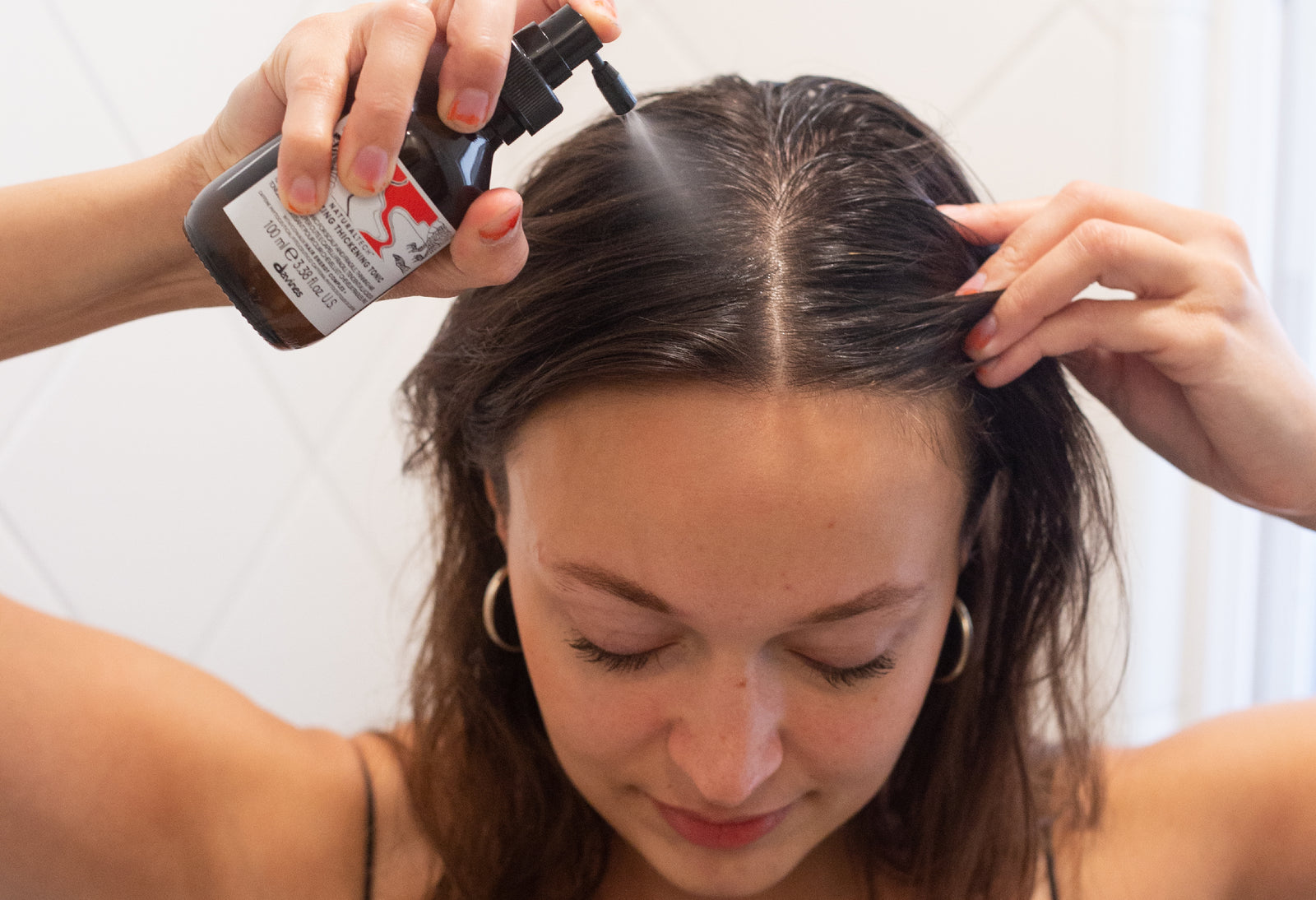
Apple cider vinegar versus other types of vinegar
Apple cider vinegar is the version most commonly discussed for hair, largely because it has a familiar smell and is easy to find. Other vinegars may also be acidic, but they are not interchangeable in scent, flavoring, additives, or strength. Avoid products containing spices, coloring, sweeteners, or other ingredients that are not intended for topical use.
A plain, food-grade apple cider vinegar is the simplest choice for a home trial. It is still not automatically gentle, natural, or suitable for every scalp. “Natural” describes its source, not its safety at full strength.
Recommended dilution ratios for beginners
A cautious starting point is one tablespoon of apple cider vinegar mixed into one cup of water. Someone with a particularly reactive scalp can begin with less vinegar, while a person with very thick hair may use more water to distribute the same diluted mixture. There is no universal ratio that works for every bottle or every head of hair.
These proportions are a conservative home-care suggestion, not a medical prescription. The mixture should never feel hot or sharply burning on the skin. If it does, rinse immediately and do not try to correct the experience by adding oils or essential oils.
Water temperature and optional ingredients to consider
Use cool to lukewarm water rather than very hot water, which can worsen dryness and scalp discomfort. Plain water is the best first trial because it keeps the ingredient list short. Aloe or a small amount of a familiar, fragrance-free conditioner may sound soothing, but extra ingredients can complicate an allergy or irritation.
For a routine that needs more structural support, Keratin Sealer is a separate hair treatment described as strengthening and sealing the cuticle. It should not be mixed into vinegar, and its documented purpose is different from that of a rinse. Keeping products separate makes application and troubleshooting simpler.
Why undiluted vinegar should never be applied directly
Undiluted vinegar can sting the scalp, irritate the skin, and cause serious discomfort if it reaches the eyes. Repeated exposure may also contribute to dryness and breakage, especially when hair is already bleached, chemically processed, or porous. A stronger solution is not a shortcut to better shine.
Store the bottle away from children and label any prepared mixture clearly. Do not use a container that could be mistaken for a drink. If the liquid gets into the eyes, flush with clean water for several minutes and seek medical advice if pain or vision changes continue.
How to use a cider vinegar rinse for hair
The safest method is deliberately uneventful: cleanse first, apply a weak mixture, keep contact brief, and rinse thoroughly. Work over a sink or in the shower so the liquid does not run onto your face or body. Protecting the scalp matters more than getting every strand saturated. A simple sequence also makes it easier to stop if something feels wrong.
Shampooing and detangling before the rinse
Wash with your usual shampoo and rinse until the lather is gone. Detangle gently with your fingers or a wide-tooth comb if needed, rather than pulling through wet knots. The rinse is not meant to replace shampoo, and applying it over heavy oil or styling residue may produce an uneven result.
A gentle cleanser such as OI Shampoo Liter can fit the cleansing stage when its documented focus suits your routine. For a scalp that is already uncomfortable, Calming Shampoo is a more topic-appropriate product option than experimenting with a stronger vinegar mixture. Choose based on your actual concern rather than stacking several active steps.
Applying the mixture to the scalp and lengths
Pour the diluted mixture into a squeeze bottle or use a small cup. Apply it in sections, concentrating first on the scalp and then lightly coating the lengths. Avoid rubbing aggressively; a gentle spread is enough. Keep your chin tilted slightly upward so the solution does not flow toward your eyes.
You do not need to drench the hair. A modest amount that reaches the intended areas is easier to control and less likely to leave the lengths dry. If your hair is very thick, divide it into more sections rather than making the liquid stronger.
How long to leave it on before rinsing
For a first attempt, rinse with clean lukewarm water after about one minute. Some people may tolerate a slightly longer contact time, but there is no clear benefit to leaving an acidic solution on for a long period. Never leave it overnight or treat it like a leave-in conditioner.
If the scalp begins to sting, itch, or feel unusually tight before the minute is over, rinse at once. Follow with conditioner on the lengths, while avoiding any product that has previously irritated your scalp. Comfort is the useful boundary here, not endurance.
How often to use it without overdoing it
Start no more than once every two weeks. If the hair remains soft and the scalp stays comfortable, some people may choose a weekly schedule, but frequent use is more likely to create dryness than extra benefit. A rinse is optional; you do not need to keep using it simply because it is part of an online routine.
A small routine can help you assess the first few trials:
- Use the same dilution each time.
- Apply it after shampooing, not on a heavily dirty scalp.
- Rinse thoroughly and condition the lengths.
- Wait several washes before deciding whether it helped.
That slower approach prevents a single good hair day from turning into overuse. It also gives the scalp time to show whether the treatment is genuinely comfortable.
Adjusting the rinse for different hair types
Hair type changes how an acidic rinse feels, but it does not change the basic safety rules. Fine strands can become dry quickly, while curls and coils often need more slip and moisture after cleansing. Chemically processed hair may be more porous and less forgiving. The safest adjustment is usually less product, less frequency, or more conditioning—not a stronger vinegar concentration.
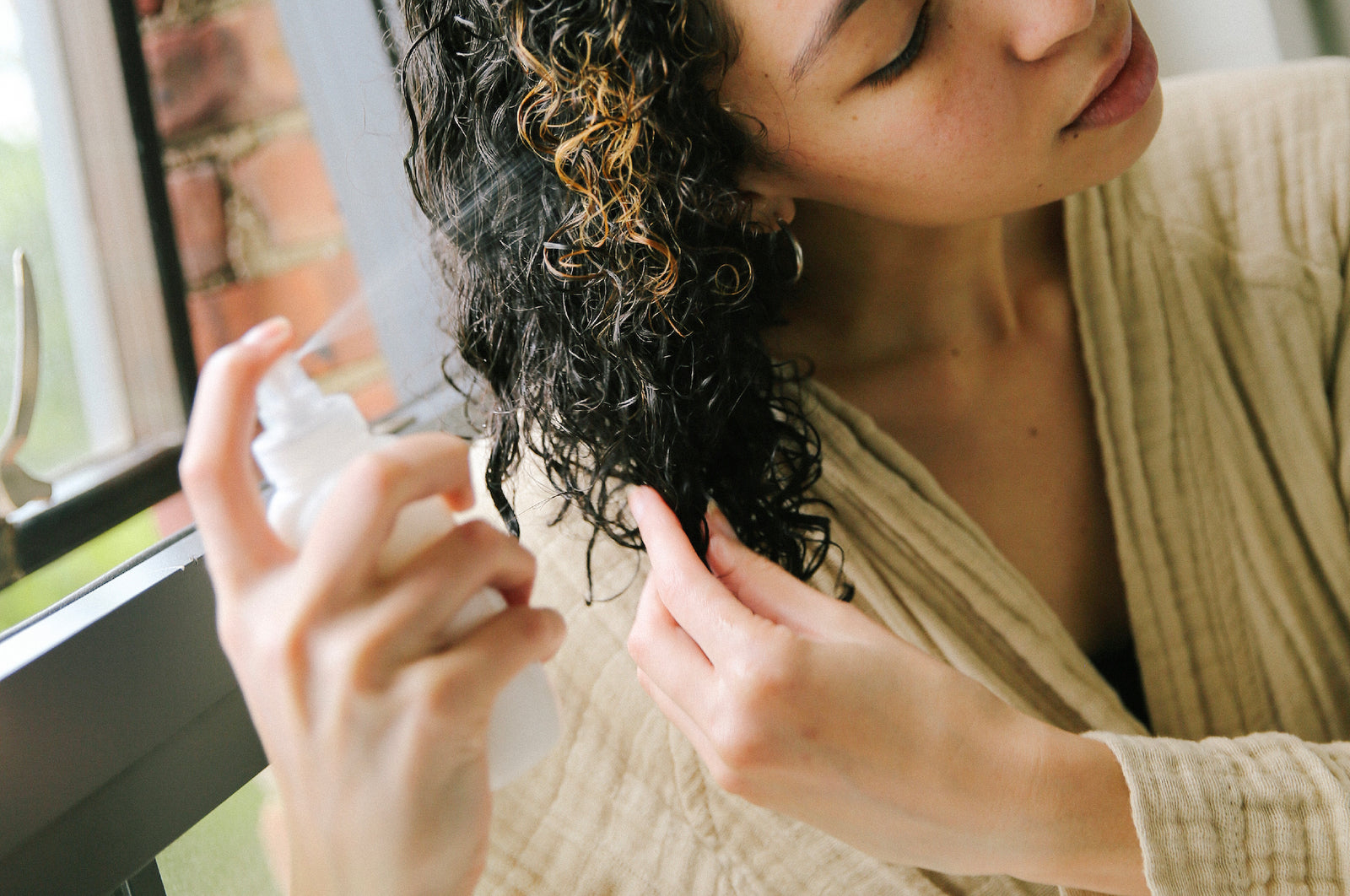
Fine or oily hair that gets weighed down easily
Fine or oily hair may seem like the ideal candidate because it can feel coated between washes. Apply a small amount mainly at the scalp and rinse thoroughly, rather than saturating the ends. If the hair becomes squeaky, brittle, or static-prone, stop or dilute further.
For excess oil that persists, a targeted cleansing product is more sensible than repeated vinegar applications. Rebalancing Cleansing Treatment is described for controlling excess sebum and greasy scalp, while Hair Refresher is described as absorbing excess oil and impurities between washes. Neither should be assumed to treat every cause of oiliness.
Dry, curly, or coily hair that needs extra moisture
Dry curls and coils generally need careful handling because friction and moisture loss can quickly affect definition. Keep the rinse mostly on the scalp, use a weaker dilution, and condition the lengths afterward. Skip the rinse if the hair already feels rough or the scalp is tight.
A curl-focused routine may include Love Curl Revitalizer, described as a leave-in conditioner for defining and softening curls, or Easy Braided Curls Set, which includes products intended to nourish and define natural curls. An acidic rinse should remain a small optional step, not the main source of hydration. For heat-free styling, Heatless Natural Waves Set is another separate routine designed to nourish and enhance natural waves.
Color-treated or chemically processed hair
Processed hair often has a more fragile surface, so test a small hidden section before applying a rinse broadly. Do not assume that vinegar will preserve color or repair chemical damage. If the hair feels dry, gummy, or unusually tangled afterward, discontinue the experiment.
A conventional repair or conditioning routine may be more predictable. Renaissance Circle Repairing Hair Mask is described for distressed strands, while Restless Circle is described as an anti-breakage mask for mechanical breakage. These are treatments with their own directions, not ingredients to add to a vinegar mixture.
Sensitive scalps and easily irritated skin
A sensitive scalp may react even to a well-diluted solution. Keep the application brief and avoid it altogether during a flare, after scratching, or when the skin is cracked. Fragrance, essential oils, and other optional ingredients can make the source of a reaction harder to identify.
For a very dehydrated scalp, Nourishing Hair Royal Jelly is described as a nourishing and remineralizing lotion. For a dry or sensitive scalp, Elevating Scalp Recovery Treatment is described as hydrating and soothing. These alternatives do not make vinegar unsafe, but they may better match a scalp that needs comfort rather than acidity.
Safety risks and common mistakes to avoid
Most problems come from concentration, frequency, or applying the rinse to compromised skin. A tingling sensation is not proof that the mixture is working. Burning, persistent itching, and worsening dryness are reasons to remove it, not signs to push through. Keep expectations modest and treat the scalp like skin.
Signs of irritation, dryness, or an allergic reaction
Warning signs include burning, redness, swelling, hives, intense itching, peeling, or a scalp that feels tight and sore after washing. Hair may also feel straw-like or become more tangled than usual. A serious reaction can include facial swelling or trouble breathing and requires urgent medical help.
Rinse the area thoroughly with water if symptoms appear. Do not apply another active treatment to cover the discomfort. If symptoms continue, speak with a healthcare professional.
Why a patch test is useful
A patch test cannot guarantee that a full scalp application will be comfortable, but it can reveal an obvious reaction before you use the rinse widely. Put a small amount of the fully diluted mixture on an inconspicuous area of skin, then observe it for a day. Never patch-test undiluted vinegar.
This is especially useful if you have eczema, allergies, a history of contact dermatitis, or recently used color or chemical services. If the test area reacts, do not proceed. A professional can help identify whether the problem is the vinegar, an additive, or an unrelated skin condition.
Protecting the eyes, skin, and damaged areas
Wear an old shirt and apply the mixture slowly. Keep it away from the eyes, ears, cuts, sunburn, and freshly scratched skin. Wash your hands after handling it, and clean any spills from the tub or sink so no one accidentally contacts the liquid later.
A controlled application is safer than pouring from the bottle. Use a towel around the shoulders and keep a cup of plain water nearby. Small practical precautions reduce the chance that a hair experiment becomes a skin problem.
When to stop using the rinse and seek professional advice
Stop immediately when discomfort is more than mild, when the scalp becomes visibly inflamed, or when symptoms return each time you use the rinse. Seek professional advice for persistent scaling, sores, pain, sudden shedding, or patchy hair loss. Those symptoms may need diagnosis rather than another home remedy.
If dehydration is the main concern, Let It Go Circle is described as a nourishing hair and scalp mask, while Vegetarian Miracle Conditioner is described as a deeply moisturizing conditioner. Product selection should follow the concern being treated, and neither product should be used to mask symptoms that need medical assessment.
How to fit the rinse into a complete hair-care routine
A rinse works best, if at all, as one small step in a routine built around gentle cleansing and adequate conditioning. It cannot compensate for excessive heat, rough detangling, or a lack of moisture. Keep the rest of the routine familiar while testing it. That way, changes in texture or scalp comfort are easier to interpret.
Pairing it with shampoo, conditioner, and leave-in products
Shampoo first, use the diluted rinse briefly, then rinse it out and condition the lengths. A leave-in product can follow once the hair is towel-damp, especially if it tangles easily. For detangling and heat protection, OI All In One Milk is described as a lightweight leave-in spray with those functions.
On dry or damaged hair, Wake-Up Circle is described as a treatment that restores hydration and tone, while Hair, Beard & Body Wash is described as a sulfate-free cleansing option for hair, beard, and body. These products belong to separate parts of a routine; adding more steps is not automatically better.
Using clarifying shampoo instead of relying on vinegar
If the real issue is heavy styling residue or persistent buildup, a purpose-made clarifying cleanser may be easier to measure and rinse away. Vinegar is not a universal substitute for shampoo, and it may irritate a scalp that needs a straightforward cleanse. Use clarifying products according to their directions and follow with conditioner.
For buildup and impurities, Detoxifying Scrub Shampoo is described as a deep-cleansing option for hair and scalp. It should not be used on the same day as an experimental vinegar rinse until you know how your scalp responds. Combining aggressive or unfamiliar steps makes dryness harder to trace.
Moisturizing the hair after an acidic rinse
Conditioning after the rinse is particularly helpful for porous, curly, coily, or chemically treated hair. Apply conditioner from mid-length to ends, allow it to sit as directed, and rinse without rough scrubbing. If the hair still feels dry, pause the vinegar step and focus on moisture for several washes.
A scalp lotion and a hair conditioner serve different purposes. Keep leave-in products on the lengths unless their directions specifically support scalp use. The goal is soft, manageable hair—not a complicated layer of products.
Tracking changes in texture, scalp comfort, and buildup
Keep a brief note after each use: the dilution, where you applied it, how long it stayed on, and how the hair felt after drying. Also record itching, flaking, oiliness, tangling, and whether buildup actually changed. This turns vague impressions into useful observations.
A simple tracking table can help separate a pleasant short-term finish from a pattern of dryness:
| What to track | Helpful change | Reason to pause |
|---|---|---|
| Scalp comfort | Calm, normal-feeling skin | Burning, itching, or redness |
| Hair texture | Softer and easier to detangle | Rough, brittle, or tangled strands |
| Appearance | Temporary clean-looking shine | Dullness or visible dryness |
| Buildup | Less coating after washing | No improvement after several trials |
After a few weeks, keep the rinse only if the benefits are clear and the scalp remains comfortable. If you want a more tailored routine, 2–4 Word Hair Care Consultation can be a practical next step for choosing products around your hair’s needs.
Conclusion
A diluted cider vinegar rinse can be tried cautiously as an occasional cleansing and shine step, but it cannot replace conditioner, clarifying care, or professional advice for scalp and hair problems. Start weak, patch-test first, rinse promptly, and let comfort guide whether it belongs in your routine. For dependable results, build the rest of your hair care around gentle products, moisture, and consistent observation.
Frequently Asked Questions
Can a cider vinegar rinse make hair grow faster?
No reliable evidence shows that a home vinegar rinse makes hair grow faster. Persistent thinning or shedding should be assessed by a healthcare professional.
How often should I use a cider vinegar rinse?
Begin about once every two weeks and increase no further than weekly only if your hair and scalp remain comfortable. Stop if dryness or irritation develops.
Should I use vinegar before or after shampoo?
It is generally used after shampooing and then rinsed out. Conditioner can follow on the lengths to reduce dryness and tangling.
Can I apply vinegar directly to my scalp?
Undiluted vinegar should not be applied directly. Always dilute it with water and avoid broken, inflamed, or freshly scratched skin.
Is a vinegar rinse safe for color-treated hair?
Color-treated hair may be more fragile, so test a hidden section first and use a very weak mixture if you proceed. Stop if the hair becomes dry or the color changes noticeably.
Can a vinegar rinse treat dandruff?
It should not be relied on to treat dandruff or another scalp disorder. Persistent flakes, soreness, or inflammation warrant advice from a clinician or dermatologist.
What should I do if the rinse burns?
Rinse immediately with plenty of clean water and do not reapply it. Seek medical advice if pain, swelling, rash, eye symptoms, or breathing difficulty persists.





Leave a comment