

Kérastase vs Redken: Which Haircare Brand Is Best for Your Hair?
Key Takeaways
There is no universal winner in the kerastase vs redken debate. The better choice depends on your hair’s condition, texture, styling habits, budget, and how much guidance you want when building a routine.
- Choose products according to your primary hair concern rather than brand reputation alone.
- Fine, dry, damaged, curly, and color-treated hair each benefit from different formula priorities.
- Compare complete routines and cost per use, not only the price of one bottle.
- Read ingredient claims alongside your hair’s actual needs and tolerance.
- Buy from authorized retailers to reduce the risk of counterfeit or expired products.
What sets Kérastase and Redken apart
Kérastase and Redken occupy similar salon-focused territory, but shoppers often experience them differently. One may feel more ritual-oriented and luxurious, while the other may feel more direct and concern-led. The distinction is less about finding a winner and more about choosing a system that fits your habits.
Brand philosophy and product development
Kérastase is commonly presented as a premium haircare brand with routines organized around specific hair needs. Redken is also associated with professional haircare, and its ranges are generally easy to understand through concerns such as repair, softness, color care, and frizz control. Since formulas change, the ingredient list and product directions on the current package should have the final say.
Differences in salon expertise and accessibility
Both names are familiar in salons, yet accessibility varies by retailer, region, and product. A stylist may recommend one line because it suits the client’s chemical history, texture, or styling routine, not because the entire brand is better. Online shopping makes comparison easier, but professional advice can still be useful when the hair is fragile or the scalp is uncomfortable.
How their product ranges are organized
The simplest way to compare the ranges is to start with the concern, then choose the cleanser, conditioner, mask, and leave-in products that support it. For example, dryness may call for nourishment and moisture, while breakage may call for strengthening and gentler handling. Avoid buying an entire collection before testing whether its texture and fragrance work for you.
Which hair concerns each brand targets best
Neither brand can be assigned one permanent specialty for every person. A routine for very dry hair is solving a different problem from one for an oily scalp or heavily lightened lengths. Your primary concern matters most: decide whether the priority is moisture, breakage, frizz, color maintenance, scalp comfort, or styling protection before comparing labels.
Kérastase vs Redken for different hair types
Hair type is only one part of the decision. Porosity, density, chemical processing, wash frequency, and heat styling can change how a formula behaves. Use the following comparisons as a starting point, then adjust based on whether your hair feels coated, dry, limp, or still difficult to manage.
Fine and thinning hair
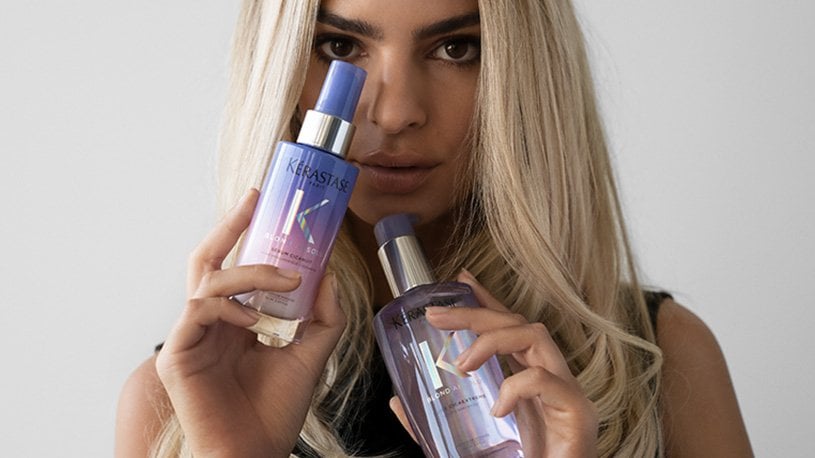
Fine hair usually needs conditioning without excessive weight, while thinning concerns may involve the scalp as well as the lengths. Look for lightweight cleansing and careful application of conditioner from mid-length to ends. A product described as nourishing is not automatically suitable for fine hair; richer textures can make it look flat if used too generously.
Dry, damaged, or overprocessed hair
Dryness calls for moisture and softness, whereas overprocessing can also involve breakage, roughness, and weakened fibers. The Kérastase Nutritive Hydrating Routine is described as a lightweight routine for fine to medium dry hair, with nourishment, detangling, anti-frizz benefits, and heat-protecting formulas. For medium to thick, very dry hair, the Kérastase Nutritive Intense Hydration Routine is described as replenishing, strengthening, and deeply hydrating, with products including Bain Satin Riche, Masquintense Riche, and Nectar Thermique.
Curly, coily, and frizz-prone hair
Curly and coily hair can be dry because natural oils travel less easily along the hair shaft. A useful routine often combines gentle cleansing, enough slip for detangling, and a leave-in or styling step that helps manage frizz without making the pattern heavy. Test products on a small section first, especially when combining rich masks with oils or creams.
Color-treated and highlighted hair
Color-treated hair benefits from a routine that cleanses without leaving the lengths feeling stripped and that supports softness between appointments. The Kérastase Chroma Absolu Bain Riche Chroma Respect is described as a sulfate-free shampoo for color-treated hair, especially when dryness or damage is present; its listed formula includes chelators, squalane, and coconut oil. Highlighted hair may need both color care and repair, so a single “color-safe” label does not answer every need.
Oily scalps and buildup
An oily scalp and dry ends can exist at the same time, which is why applying one heavy product from roots to tips often creates an uneven result. Focus cleansing at the scalp, rinse thoroughly, and keep masks or richer conditioners on the lengths. For concerns such as excess oil, dandruff, or itchiness, the Kérastase Initialiste Scalp & Hair Serum is described as a leave-in treatment designed to purify and balance the scalp, while the Kérastase Spécifique Cure Antipelliculaire Anti-Dandruff Scalp Treatment is described as an intensive four-week treatment for dandruff, itchiness, and irritation.
A scalp that is persistently painful, inflamed, or shedding more than usual needs medical attention rather than an endless cycle of product changes.
Comparing their most popular product lines
Line names can make a comparison feel more precise than it really is. Products within one line may differ in weight, purpose, and intended frequency of use. The table below is best read as a map of broad positioning, not as a promise that every item will suit every head of hair.
Kérastase Nutritive vs Redken All Soft
Nutritive is generally considered when dryness, nourishment, softness, or manageability is the main concern. Redken All Soft is commonly compared with it because shoppers also associate that range with softer-feeling hair. Within Nutritive, the lightweight routine suits fine to medium dry hair, while the richer routine is aimed at medium to thick, very dry hair, so hair density should guide the choice.
Kérastase Résistance vs Redken Extreme
Both line names are often brought into conversations about damaged or weakened hair. The Kérastase Résistance Sérum Thérapiste is described as a dual-action serum for severely damaged, over-processed hair, including breakage and brittleness, and is suitable for all hair types and textures. The Kerastase Resistance Masque Thérapiste is described as an intensive repair mask for very damaged hair, addressing breakage and split ends with Fibra-Kap™, SP94, six amino acids, and a wheat protein derivative.
Kérastase Blond Absolu vs Redken Blondage
Blond-care lines are designed for hair that has been lightened, but the exact priority can differ: moisture, softness, tone maintenance, or damage management. Compare the product’s directions and current ingredient list rather than assuming that every shampoo or mask in a blond range performs the same role. Lightened hair is often more porous, so alternating cleansing with conditioning and limiting unnecessary heat can matter as much as the label.
Kérastase Discipline vs Redken Frizz Dismiss
Frizz can come from dryness, humidity, texture, mechanical damage, or an incompatible styling routine. A smoothing range may improve manageability, but it cannot permanently change the underlying pattern or replace careful drying and detangling. Heat protection is also relevant: Kérastase Thermique Régénérant is described as a heat protectant for all hair types and textures that shields hair from styling-tool damage while moisturizing and protecting it.
Kérastase Genesis vs Redken Acidic Bonding Concentrate
These lines are often compared when breakage and weakened hair are the shopper’s main concerns, but similar positioning does not make their products interchangeable. The Kérastase Genesis Défense Thermique Spray is specifically described as a thermal protectant for weakened hair prone to breakage, with protection up to 220°C. A routine should be judged by the exact product role—cleanser, conditioner, mask, or protectant—rather than by the collection name alone.
| Comparison point | What to examine | Why it matters |
|---|---|---|
| Main concern | Dryness, breakage, frizz, color, or scalp comfort | It narrows the useful product category |
| Hair density | Fine, medium, or thick strands | It affects whether a formula feels light or heavy |
| Processing history | Virgin, colored, highlighted, or chemically treated | Processing can change porosity and resilience |
| Routine role | Cleanser, conditioner, mask, serum, or protectant | Products with similar claims may serve different purposes |
The practical lesson is simple: compare like with like. A heat protectant should not be judged against a repair mask, and a rich conditioner may be a poor match for fine hair even when both products promise softness.
Ingredient and formula differences
Ingredient discussions can be helpful, but they are easy to oversimplify. A formula works as a complete composition, and the same ingredient may feel different depending on concentration, supporting ingredients, hair porosity, and how often the product is used. Treat marketing language as a prompt for closer reading, not as a substitute for testing.
Strengthening technologies and bond repair
Repair language can refer to several different goals, including reducing the appearance of breakage, improving feel, reinforcing the fiber, or protecting hair from further damage. The Kérastase Resistance Ciment Anti-Usure conditioner is described as a restorative conditioner with Pro-Keratine Complex, ceramides, and Resurrection Plant Sap that rebuilds hair structure, prevents breakage, and enhances shine. The Bain Force Architecte Shampoo is described as a reconstructing shampoo that rebuilds hair fibers and helps prevent breakage and split ends.
Hydration, nourishment, and smoothing ingredients
Hydration is about helping hair retain or receive moisture, while nourishment often describes the combination of emollient and conditioning ingredients that improve feel. The Kérastase Bain Elixir Ultime is described as a hydrating shampoo for shine and nourishment, with marula, camellia, and argan oils listed among its ingredients. Oils may make coarse or porous hair feel smoother, but a fine strand may prefer a smaller amount or a lighter product.
Sulfates, silicones, and other formula considerations
Sulfates and silicones are not automatically good or bad for everyone. Cleansing strength, buildup, color history, scalp sensitivity, and styling preferences all influence whether a formula feels successful. If sulfate-free care is a personal requirement, check the individual product rather than assuming the whole collection follows one formula policy.
Fragrance, texture, and sensory experience
Fragrance and texture affect whether a routine is pleasant enough to use consistently. The Nutritive descriptions include a floral fragrance with powdery, fresh, and musky notes, while richer masks and conditioners may feel more substantial during application. If you are sensitive to fragrance, read the full ingredient list and consider a patch test where appropriate.
How to assess ingredient claims for your hair
Start with the result you can observe: less tangling, fewer snapped hairs, softer ends, a calmer scalp, or improved styling control. Then check whether the product is intended for your hair type and whether its instructions match how you actually wash and style. The Kérastase Thermique Régénérant and Keratine Thermique Heat Protector both address heat protection, but the individual descriptions and listed ingredients should still be compared before purchase.
A short trial is more informative than collecting several products at once. Change one major variable, use the product as directed, and notice how your hair behaves over several washes.
Comparing performance and value
Performance is not only the first impression after one wash. It includes how manageable the hair remains, whether the routine fits your schedule, and whether the product solves the stated concern without creating a new one. Value also depends on dose, frequency, hair length, and whether a product replaces several steps.
What results to expect from each brand
Expect cosmetic improvements such as softness, shine, detangling, smoother feel, or easier styling when the formula matches the hair’s needs. Claims should be read literally and in context; for example, the Nutritive pages describe up to 72 hours of nutrition or hydration for particular routines, not a universal result for every user. Results vary with washing, humidity, heat, and the condition of the hair.
Price per product and cost per use
A higher shelf price does not necessarily mean a routine costs more over time, and a lower-priced bottle is not automatically better value. Compare the amount used per wash, how often the product is applied, and whether the bottle size suits your routine. Masks and treatments may be used weekly, so their cost per use can differ substantially from a shampoo used several times a week.
Professional treatments versus at-home formulas
Salon treatments can include assessment, technique, timing, and follow-up, while at-home formulas depend on the shopper applying them correctly. A stylist can also tell whether the apparent problem is dryness, chemical damage, buildup, or a scalp condition. At-home care is most useful when its role is clear and its directions are followed.
When a premium formula is worth the investment
A premium product may be worth considering when it fits a persistent concern, is pleasant enough to use regularly, and replaces trial-and-error purchases. It is less persuasive when the main issue is an unsuitable wash frequency, excessive heat, or a need for medical scalp care. Spend more on the step that addresses the problem most directly rather than automatically upgrading every step.
How long each product typically lasts
There is no reliable universal lifespan for a bottle because hair length, density, wash frequency, and dispensing habits differ. Shampoo may be diluted with water at the scalp during washing, while a mask is normally used in a smaller weekly amount. Store products as directed and track how quickly you finish them; that gives you a more useful personal cost-per-use estimate than a generic claim.
Choosing between Kérastase and Redken
The best routine is usually the one you can understand and maintain. Begin with one primary concern, select a small number of supporting products, and give the routine enough time to show whether it is helping. A crowded shelf can make it harder to identify what is actually working.
Select Kérastase for personalized luxury haircare
Kérastase may appeal to shoppers who enjoy a more polished, ritual-like routine and want products organized around distinct concerns. Within its documented range, options cover nourishment, repair, color care, scalp care, and heat protection. The choice should still be based on the specific product description and the condition of your hair, not on the prestige of the name alone.
Select Redken for targeted repair and accessible routines
Redken may suit shoppers who prefer a straightforward routine built around a clearly defined concern such as softness, damage, color, or frizz. Accessibility can also mean finding the right product size, retailer, or price point more easily. Whichever brand you choose, targeted care works best when the product’s role matches the problem you are trying to solve.
Match the brand to your primary hair concern
Write down what you want to change before shopping. “My hair feels rough after highlighting” leads to a more useful search than “I want better hair.” A simple priority list keeps the purchase focused:
- Identify whether the scalp, lengths, or both need attention.
- Decide whether moisture, strength, smoothness, or color maintenance comes first.
- Choose one cleansing product and one conditioning or treatment step to begin.
- Add heat protection if you regularly use hot tools.
This approach also makes it easier to judge results. If the main concern is breakage, softness alone may not be enough; if the concern is dryness, a very strengthening routine may leave the hair feeling stiff.
Build a routine without mixing incompatible products
Mixing brands is not automatically a problem, but mixing too many strong or rich treatments can make the result difficult to predict. Keep the cleanser, conditioner, treatment, and leave-in roles distinct, and avoid adding several new products on the same day. A routine should be adjusted when the hair gives clear feedback, such as limpness, residue, or persistent roughness.
When to consult a stylist before buying
Ask a stylist for help before purchasing a large routine if your hair has been recently bleached, relaxed, permed, or colored repeatedly. Professional guidance is also sensible when breakage is sudden, the scalp is irritated, or you cannot tell whether the issue is buildup or damage. A stylist can assess the hair in person, though persistent scalp or shedding concerns may require a healthcare professional.
How to shop for authentic haircare products
Authenticity matters because formulas can lose effectiveness when products are counterfeit, expired, improperly stored, or tampered with. Price alone cannot verify a product. Look at the seller, packaging, batch information, and return policy together.
Why authorized retailers matter
An authorized retailer reduces the risk of receiving counterfeit or expired cosmetics. Boutique Deauville states that it sources directly from brands, carries genuine products, and maintains fresh inventory through regular shipments. That combination is useful when buying professional haircare online, especially for products with active or carefully balanced formulas.
How to identify counterfeit or expired products
Be cautious when the price is dramatically lower than normal, product details are inconsistent, or the seller avoids showing clear packaging photographs. Strange spelling, uneven printing, a changed scent, separated texture, or a damaged seal can all justify contacting the retailer before use. Do not apply a questionable product simply because the bottle looks familiar.
Checking product packaging and batch information
Compare the product name, size, ingredient panel, closure, and directions with the manufacturer’s current presentation where possible. Batch information may help a retailer investigate freshness or authenticity, although coding systems vary and are not always simple to decode independently. Keep your receipt and photograph the packaging if something appears unusual.
Buying online while protecting product quality
Choose a seller that clearly identifies itself, explains its sourcing, and provides customer support. Boutique Deauville says orders are processed within one to two business days and shipped with UPS or Canada Post, while delivery can take up to seven business days depending on location. Before ordering, review shipping conditions, the return policy, and whether the seller offers secure haircare shopping for your region.
Storing professional haircare for maximum shelf life
Keep bottles closed and store them away from direct sunlight, excessive heat, and repeated water exposure. Do not transfer products into unmarked containers, since that removes useful batch and ingredient information. If the smell, color, or texture changes noticeably, stop using the product and ask the retailer for guidance.
Conclusion
The kerastase vs redken choice becomes much clearer when you compare the actual concern, formula role, hair density, processing history, and cost per use rather than relying on reputation. Start with a focused routine, buy authentic products, and give your hair enough time to show whether the match is right; when you are ready to browse, explore the available Kérastase collection with those criteria in mind.
Frequently Asked Questions
Is one haircare brand better for everyone?
No. Hair texture, density, porosity, chemical processing, scalp condition, and styling habits all affect how a product performs, so the best choice is personal rather than universal.
How should I choose products for dry hair?
Look for a routine that supports moisture, softness, detangling, and manageable styling without making the hair heavy. Fine dry hair often prefers lighter textures, while thick or very porous hair may tolerate richer conditioning.
Can a routine help with hair breakage?
It can reduce factors that contribute to breakage by improving conditioning, detangling, and heat protection. Sudden or severe breakage should also prompt a review of chemical services and professional advice.
Should I use a mask every time I wash my hair?
Not necessarily. Many people use masks periodically and use a lighter conditioner more often, but the appropriate frequency depends on the product directions and whether the hair feels dry, coated, limp, or still rough.
How can I tell whether a product is too heavy?
Hair that becomes limp, greasy, coated, or difficult to style soon after washing may be receiving more conditioning than it needs. Reduce the amount, keep it away from the scalp, or switch to a lighter texture.
Are salon products worth their higher price?
They may be worthwhile when a product addresses a specific concern, lasts a reasonable amount of time, and fits your routine. Compare cost per use and results rather than judging value from the initial price alone.
When should I ask a professional for help?
Consult a stylist for recently processed or severely damaged hair, and seek medical advice for persistent scalp pain, inflammation, unusual shedding, or symptoms that do not improve with basic care.







Laissez un commentaire