

Kérastase Hair Loss: What Genesis Products Can—and Can’t—Do
Key Takeaways
Hair shedding, breakage, and thinning can look similar but have different causes. A hair-care routine may help with fragile strands, while persistent or sudden changes call for a closer look.
- Hair shedding and breakage are not the same issue.
- Styling habits and health changes can both affect hair.
- Hair-care products may help reduce breakage but do not diagnose its cause.
- Choose products based on your scalp, hair, and the directions on the label.
- Sudden, persistent, or patchy hair loss deserves professional attention.
What people mean by hair loss
People use “hair loss” to describe several changes, from extra strands in the shower to gradual thinning or short, snapped hairs. Those experiences can have different causes, so the first useful step is noticing what is actually changing. A hair-care routine can support the condition of the hair fiber, but it cannot explain every change in density.
Shedding, breakage, and thinning are different concerns
Shedding is the release of hairs from the scalp, while breakage happens when a strand snaps somewhere along its length. Thinning describes a visible change in density and may happen gradually or in a more noticeable pattern. The terms overlap in everyday conversation, but they do not point to the same cause or necessarily call for the same response.
A strand with a small bulb at one end may have shed from the scalp; shorter pieces without a bulb can be more consistent with breakage. That clue is not a diagnosis, though, and changes in density are best judged over time rather than from one wash or brush session. Where the change begins can help you decide what to observe next.
| What you notice | What it may describe | A useful next step |
|---|---|---|
| Full-length strands with a bulb | Shedding from the scalp | Track whether it continues or changes |
| Short, uneven pieces | Breakage along the hair shaft | Review handling, heat, and chemical services |
| A gradual change in density | Thinning | Note the pattern and consider professional advice |
These are clues, not a way to diagnose yourself. Several issues can happen at once, and a clinician can help distinguish them when the pattern is unclear.
Common causes range from styling habits to health changes
Frequent heat styling, tight hairstyles, rough detangling, and chemical processing can make hair more vulnerable to breakage. Shedding or thinning can also be associated with health changes, medication, stress, hormonal shifts, or nutritional issues. Since causes vary, a product that improves the feel or manageability of hair may not address what is happening at the scalp or elsewhere in the body.
Clues that can help you tell shedding from breakage
Consider whether the hairs you see are mostly full length or short and snapped, and whether the change is spread across the scalp or concentrated in one area. Note when it started and whether anything changed around that time, such as styling practices or general health. A few observations can make a later conversation with a professional more useful, without requiring you to reach a conclusion on your own.
How Kérastase Genesis is designed to support fragile hair
The Genesis products linked here are described in terms of strengthening weakened hair and helping reduce breakage or hair loss. That language should not be confused with a promise to treat every medical cause of shedding or thinning. The distinction matters: a product aimed at fragile strands may be relevant to breakage, but the reason for a change in density still needs to be considered.
The difference between reducing breakage and treating hair loss
Reducing breakage means helping limit snapped strands, which can affect how full or long hair appears. It is not the same as treating a condition that causes hairs to shed from the scalp. For example, the Genesis Anti-Chute Shampoo is described as gently cleansing the scalp and helping strengthen fibers and reduce breakage-related hair loss; that description does not establish that shampoo treats every cause of hair loss.
If the issue appears to be fragile lengths, a hair-care product may fit into a routine focused on handling and strand condition. If you are seeing sudden loss, distinct patches, or ongoing thinning, a clinician can assess causes that a cosmetic routine cannot identify. The product description and the pattern of change should be kept in separate lanes.
What the Genesis range is intended to address
The available product descriptions emphasize weakened hair, breakage, and strengthening. The Genesis Hair Care Set, for example, is described as a routine for oily roots and weakened lengths, with shampoo, masque, heat-protective leave-in, and an anti-breakage scalp serum. For dry, weakened hair, Genesis Anti-Chute Shampoo is described as a nourishing, fortifying cleanser that gently cleanses the scalp, removes pollution, and detangles without weighing hair down.
These are product-specific descriptions, not a general guarantee of hair regrowth. If your main concern is visible thinning or a persistent change in shedding, consider seeking advice about the cause while deciding whether a hair-care routine also suits your needs.
Why results depend on the cause of hair changes
The same routine will not make sense for every person because breakage, shedding, and thinning can arise for different reasons. A hair product may be relevant to the condition of fragile strands, while a health-related cause may need a different kind of assessment. Keep expectations tied to the product’s stated purpose, and give changes enough time to observe without treating a cosmetic result as a medical answer.
Choosing Kérastase Genesis products for your routine
A practical routine begins with the concern you can observe: scalp feel, oiliness, dry or weakened lengths, or strands that tend to snap. Product names alone are not enough to decide what belongs in your bathroom; read the product description and directions, then consider how it fits with what you already use. You do not need to add every step at once.
When a shampoo may suit your scalp and hair
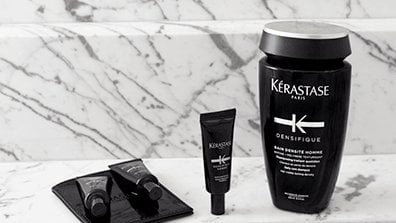
A shampoo is primarily a cleansing step, so consider how your scalp and lengths feel after washing and how often you typically cleanse. The Genesis Homme Thickening Shampoo is described as a daily cleanser for thinning, breakage-prone hair that removes impurities while helping strengthen hair and promote a thicker, fuller look. The Genesis Homme Daily Strengthening Shampoo is described as a daily cleanser that helps reduce breakage and hair loss while leaving hair refreshed and invigorated.
Those two descriptions are specifically for men’s hair-care products; choose based on the stated use and your own needs rather than assuming every shampoo suits every scalp. If your scalp is uncomfortable or the change in hair is unexplained, a cleanser alone may not be the answer.
How to choose between a conditioner and a mask
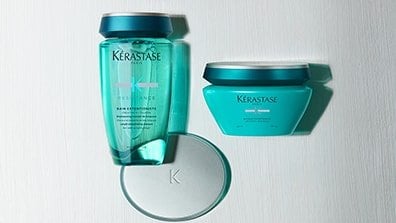
Conditioners and masks are different routine steps, and your choice can depend on how much conditioning your lengths seem to need. Genesis Masque Reconstituant is described as a deeply conditioning mask for damaged, weakened hair that hydrates and nourishes while helping strengthen hair and reduce breakage. For a separate conditioner option aimed at weak, brittle, or damaged hair, Ciment Anti-Usure Conditioner is described as hydrating and smoothing while helping prevent future breakage.
For very damaged or chemically treated hair, Soin Premium Therapiste is described as a treatment applied to damp lengths and ends and left on for five to ten minutes before rinsing. Follow each product’s directions rather than combining steps by guesswork; more conditioning is not automatically better for every hair type.
What to know about the Genesis serum
The Genesis Homme serum is described as a daily leave-in treatment for men that helps strengthen hair and target thinning, breakage, and hair loss. Genesis Homme Serum is suitable, according to its description, for all hair types and textures; the directions say to apply four to six drops to the scalp, massage in, and leave it in. Follow the package directions for the product you have, since similar-sounding treatments may have different instructions.
Other scalp products have distinct descriptions and routines. Initialiste Scalp & Hair Serum is described as a lightweight leave-in treatment that purifies and balances the scalp while helping soothe irritation and support healthy hair growth. Spécifique Cure Anti-Thinning is described as a daily scalp treatment used for six weeks. These descriptions do not replace an assessment when hair changes are sudden or persistent.
How to use the products consistently
Consistency is easier when a routine is simple enough to repeat. Start with a wash-day pattern that suits your hair and scalp, then add a leave-in step only if its directions and purpose fit your concern. Keep notes about what you use and what you observe; a clear record is more useful than changing several products at once.
Build a wash-day routine around your hair type
Start with cleansing and conditioning steps you can use comfortably, then adjust based on how your scalp and lengths respond. For example, Genesis Homme Thickening Spray is described as a leave-in spray for men’s thinning hair that adds lightweight hold and fuller-looking volume, while helping protect against breakage and damage. It is directed for use on dry or towel-dried hair before styling.
A short routine can help you notice whether a step makes your hair feel easier to manage, without confusing that change with a medical outcome. If you are choosing what to include, these habits can keep the routine manageable:
- Use products according to their individual directions.
- Introduce one new step at a time when possible.
- Avoid rough handling and excessive tension during detangling.
- Keep a note of changes in your scalp, shedding, or breakage.
This approach makes it easier to identify a product that does not suit you and to discuss the timeline with a professional if concerns continue. It also prevents a routine from becoming so complicated that it is difficult to follow.
Apply leave-in products as directed
Leave-in treatments and styling products are not interchangeable, even when they are used after washing. Genesis Défense Thermique is described as a heat-protectant spray for weakened, breakage-prone hair that helps protect up to 220°C while nourishing and hydrating hair. For damaged hair, Sérum Filler Fondamental is described as a lightweight leave-in treatment applied to towel-dried hair; its description says it helps seal and reinforce hair, reduce frizz, repel humidity, and protect against hard-water calcium and heat up to 230°C.
Apply each product where and how its directions specify, and avoid assuming that a scalp serum belongs on the lengths or that a styling product is a treatment. The Genesis Homme Texturizing Hair Wax, for instance, is described as a styling wax for texture, body, and strong hold with a natural matte finish—not as a scalp treatment.
Track changes without expecting overnight results
Hair changes are easier to judge across a stretch of time than from day to day. Take occasional notes about when shedding or breakage seems to change, whether you have altered your routine, and whether you notice any scalp symptoms. Avoid treating a brief improvement in styling or texture as proof that an underlying cause has resolved.
What to consider before buying
Before buying, make sure the product description matches the concern you are trying to address. Hair-care products can support cosmetic goals such as cleansing, conditioning, styling, or helping reduce breakage, but they do not all serve the same purpose. Read the instructions and ingredients, and consider whether a clinician should evaluate the change before you spend on several products.
Check ingredients and directions for use
Product names can sound similar while directions and intended uses differ. For damaged hair, Résistance Sérum Thérapiste is described as a dual-action serum used on damp or dry lengths and ends to help repair and strengthen strands, protect against heat and further damage, and leave hair feeling smoother and healthier. Bain Force Architecte Shampoo is described as a reconstructing formula for damaged, weak, or over-processed hair that helps reinforce fibers and reduce breakage and split ends.
A separate listing for Bain Force Architecte also describes a reconstructing formula for damaged or weakened hair, with help for reducing breakage and split ends. Check the packaging and the directions for the specific product you purchase rather than relying on a name alone. If a product’s purpose does not match your concern, it may not be the right next step.
Consider scalp sensitivity and possible irritation
Read the ingredient list and directions before applying a new product, particularly if you have a history of scalp sensitivity or irritation. Stop using a product if it seems to cause a reaction, and ask a health professional for advice if symptoms are significant or persistent. A product description cannot predict how every individual scalp will respond.
Buy from an authorized retailer to help ensure product authenticity
Buying from an authorized retailer can help reduce the risk of counterfeit or expired cosmetics. The retailer’s information states that it sources products directly from the brands it carries and describes its inventory as fresh and authentic. Check the seller and product packaging, especially when purchasing online, and contact the retailer if you have questions about the item.
When to seek professional advice
A dermatologist or other qualified clinician can help assess hair changes that are unexplained, persistent, or accompanied by scalp symptoms. Products may play a role in caring for fragile lengths, but they cannot determine why hair is shedding or thinning. When a change feels unusual for you, it is reasonable to seek advice rather than waiting for a routine to solve it.
Signs that warrant a dermatologist’s assessment
Consider an assessment if you notice sudden or patchy hair loss, a widening part, a receding hairline, or scalp itching, pain, redness, or scaling alongside hair changes. These signs do not point to one specific cause on their own, but they are worth discussing with a professional. Seek advice sooner if the change is rapid or concerning.
Why sudden or persistent shedding deserves attention
A short-lived increase in shedding can occur around changes in health or life circumstances, but persistent or pronounced shedding should not be dismissed as ordinary breakage. The timing, pattern, and other symptoms may help a clinician decide what to explore. If you are unsure whether strands are shedding or snapping, bringing your observations can help clarify the conversation.
How a clinician can help identify the underlying cause
A clinician can ask about when the change began, your health history, medications, and hair-care practices, then examine your scalp and hair. Depending on what they find, they may recommend further evaluation or a treatment plan that addresses the cause. This can help you decide whether cosmetic products are a useful complement, rather than asking them to stand in for diagnosis.
Conclusion
Hair shedding, breakage, and thinning may appear similar, but they are not interchangeable concerns. Choose hair-care products for the purpose stated in their directions, keep expectations realistic, and seek professional advice for sudden, persistent, or unexplained changes; when you are ready to compare options, browse the collection and check each product’s details.
Frequently Asked Questions
Is hair shedding the same as hair breakage?
No. Shedding refers to hairs releasing from the scalp, while breakage happens when strands snap along their length. Both can occur at once, and the distinction is not always obvious without closer assessment.
What can cause hair to look thinner?
Hair may look thinner because of breakage, shedding, or other changes in density. Styling practices and health changes can both play a role, so the pattern and timing matter.
Can tight hairstyles contribute to breakage?
Repeated tension from tight hairstyles may stress the hair and contribute to breakage. Looser styles and gentle handling can reduce unnecessary strain on fragile strands.
When should I ask a professional about hair loss?
Seek professional advice if hair loss is sudden, persistent, patchy, or accompanied by scalp discomfort or visible irritation. A qualified clinician can help assess possible causes.
Does seeing more hair in the shower always mean hair loss?
Not necessarily. Hair in the shower may reflect normal shedding, breakage, or a change in how often you wash and brush. Look at the broader pattern rather than drawing a conclusion from one wash.
Can hair-care products explain why my hair is thinning?
No. Hair-care products cannot diagnose the cause of thinning. A clinician can consider your history and examine your scalp to help identify what may be contributing.
How can I keep track of hair changes?
Note when the change began, whether it is continuing, and what you observe about strand length, density, and scalp symptoms. Keeping a simple record may help you describe the pattern during a professional assessment.




Leave a comment